
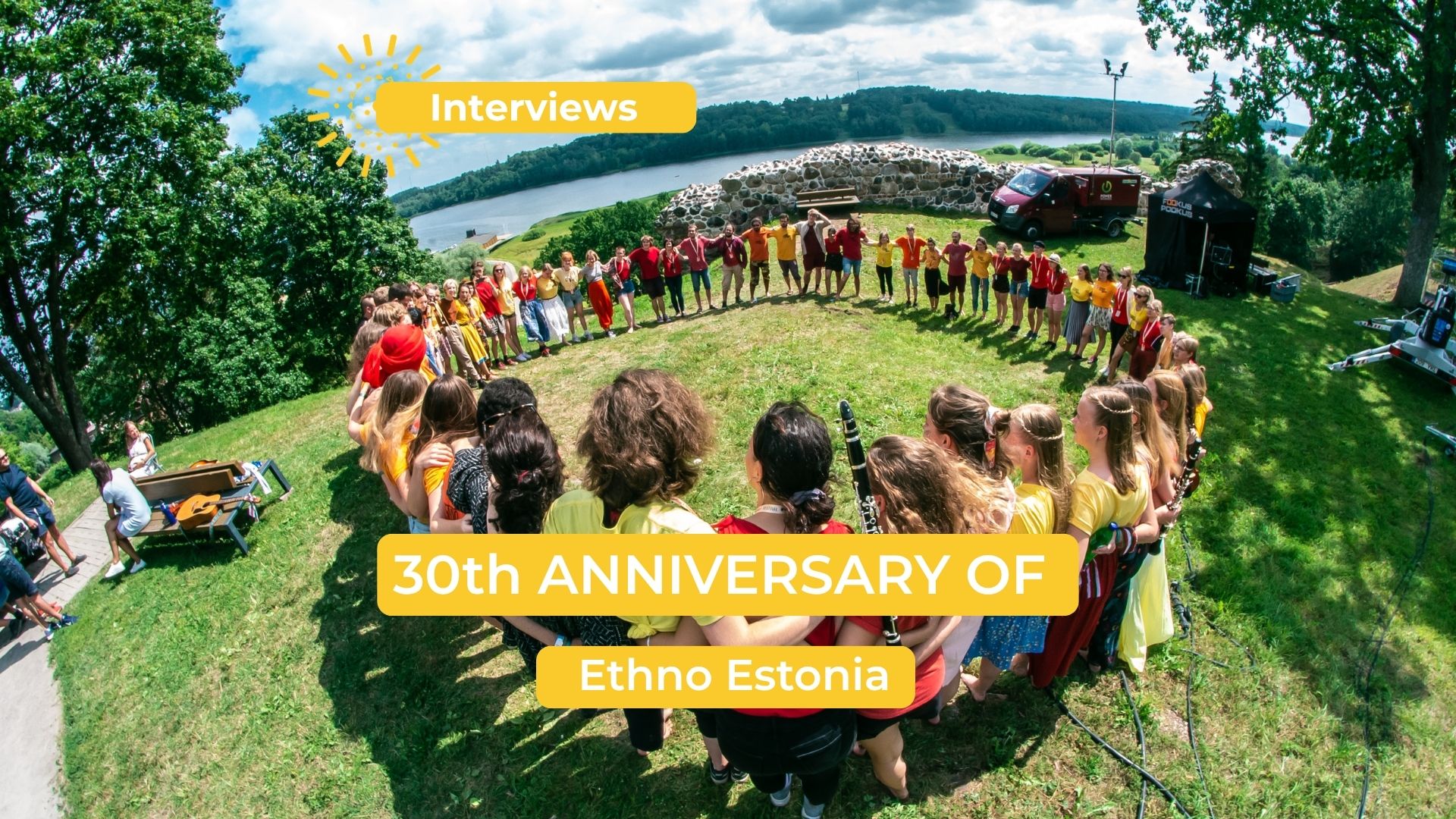
For thirty years, Ethno Estonia has brought together young musicians, shared learning, and the joy of making traditional music together.
To mark this special anniversary, we asked Margit Kuhi and the Ethno Estonia team some questions, looking back at where it all started, what Ethno Estonia has become and the future of the program.
Ethno Estonia began in 1997, inspired by Krista Sildoja and Tuulikki Bartosik’s experience at the Ethno Sweden camp in Falun. That summer, they brought the idea home and organised the very first camp in Viljandi, just before the Viljandi Folk Music Festival, bringing together 12 participants.
Originally called Noorte Moosekantide Pillimängupäevad, the camp became officially known as Eesti ETNO (Ethno Estonia) in 2000.
When you look back over the past 30 years, what changes or growth make you the most proud?
Margit Kuhi : I’m especially proud of what we call the Ethno Estonia Ecosystem. Over the years, Ethno Estonia has grown far beyond a single summer camp. Young people can become part of the Ethno family from around the age of ten through our different programmes, continue as Ethno participants until the age of thirty-nine, and later return as volunteers, artistic mentors, organisers and community leaders. As far as we know, this kind of year-round Ethno pathway is unique within the international Ethno network.
Discovering All Ethno Estonia Programs Besides the original Ethno Estonia, we also run Ethno Estonia Teens and Ethno Estonia Kids simultaneously. In addition, we host the magical Winter Ethno Estonia every January/February. Over the years, we’ve organized Ethno On The Road for both adults and teens, as well as Ethno Mentors’ Trainings. Those trainings also inspired Ethno Rendezvous – a place for young mentors’ to try out their new knowledge and skills!
Today, after eighteen editions, I have the privilege of gradually handing over more responsibility to a younger generation of organisers – Kärt Tambet, Hanna-Reet Ruul and Leon Allik. For me, that is perhaps the greatest achievement of all – not that I have organised Ethno for so many years, but that the community is strong enough to continue growing with new people.
All this has been possible because of the passion of everyone involved and thanks to the Estonian Traditional Music Center NGO.
Is there a particular moment or memory from Ethno Estonia that has stayed with you all these years?
Margit: It’s almost impossible to choose just one memory because every single Ethno has been unique. Each camp has its own atmosphere, its own people and its own stories, and every year I leave feeling that something special has happened. What has stayed with me most is seeing how Ethno changes people’s lives. Young musicians arrive as strangers, often a little nervous, and within just a few days they become a family. They learn from one another, discover new cultures, gain confidence and often make friendships that last for years. Watching that transformation happen again and again is something I never get tired of.
Ethno has changed my own life as well. It has brought so much colour, joy and meaning into it. Through Ethno I have met extraordinary people from all over the world, learned countless lessons and become part of a community that feels like an extended family. Of course I treasure the late-night jam sessions, spontaneous dancing, shared meals and unforgettable concerts. But when I think about Ethno after all these years, what I remember most is not one particular moment—it’s the feeling that every camp has the power to change lives, including my own.
Léon: I remember at 2015, in my first Ethno, standing on the porch before the Manor where the camp takes place, it was the lunch break and people were jamming and singing some balkan tunes, I was standing next to them and singing along, I felt shivers running down my spine since I had never felt music can be so engaging and fun, but at the same time have depth and beauty.
On a personal level, what does celebrating Ethno Estonia’s 30th anniversary mean to you?
Kärt: It’s a big and beautiful feeling! Celebrating 30 years of this special music program means that there are now possibly people from all over the world from 18-60 years old who belong to the same community and share the same.
Hanna-Reet: Reaching 30 years feels incredibly special. Very few projects manage to stay alive for so long while keeping their spirit intact. During these decades, people, traditions, and the world around us have all changed, and Ethno has changed with them. I think that’s one of the reasons it has lasted: it’s stayed true to its core while remaining open to new ideas. Being able to embrace change while holding onto your values is what gives something a long and meaningful life.
Léon: Personally, I feel that seeing this project flourish and celebrating its long age brings me hope that we as humans can indeed find common ground in this divisive age. And music in general, but folk music especially, plays a big role in discovering the uniqueness and importance of different cultures. And supports building the bridges between these cultures.
Looking back, what kind of legacy do you feel Ethno Estonia has created over the past three decades?
Margit: Looking back, I think Ethno Estonia’s greatest legacy is the people and the connections it has created. Just as important is the international network that Ethno opens up. For many participants, Ethno Estonia is the beginning of lifelong friendships, international collaborations and new musical opportunities. Musicians meet here, visit one another’s countries, take part in other Ethno camps, form bands, create new projects and continue learning from one another long after the camp has ended. We’ve built a community that connects generations, cultures and musicians, creating friendships, musical collaborations and opportunities that continue to grow long after the camp is over.
When people think back on this anniversary edition, what do you hope they’ll remember most?
We hope they’ll remember it the way people remember every Ethno – with warmth, inspiration, and the feeling of belonging to something special. Every edition has its own character, but they’re all filled with joy, curiosity, and music. This year especially, we hope participants leave with feeling how deeply valued and loved Ethno Estonia is within the Estonian folk music community, and that they now carry a small part of that story with them. We hope they remember that they became a part of a living tradition that continues to grow.
As you look ahead, what are your hopes and dreams for Ethno Estonia in the years to come?
We hope to continue onwards and reach 60, 90, 120 years! That Ethno Estonia will continue to inspire new generations to discover traditional music, build lasting connections and become part of a community that extends beyond a summer camp. If thirty editions from now, young people still arrive with the same curiosity, openness and generosity to share their music and learn from one another, then we will be sure that Ethno Estonia has stayed true to its purpose.

Supported By 

© Copyright 2022 | JM International